

Supply Chain Disruptions Q3 2026: How OEMs Can Outperform in a Constrained Market
The electronics supply chain has entered a new phase. Unlike previous shortages driven by sudden disruptions, today’s constraints are structural. Investment in AI infrastructure is changing how semiconductor manufacturers allocate capacity, how PCB material suppliers prioritize production, and ultimately how OEMs compete for critical components.
While many organizations are waiting for markets to normalize, leading OEMs are adjusting their engineering and procurement strategies now. The opportunity is no longer simply finding components. It is building products that can be manufactured reliably despite ongoing market constraints.

AI Is Driving More Than Memory Demand
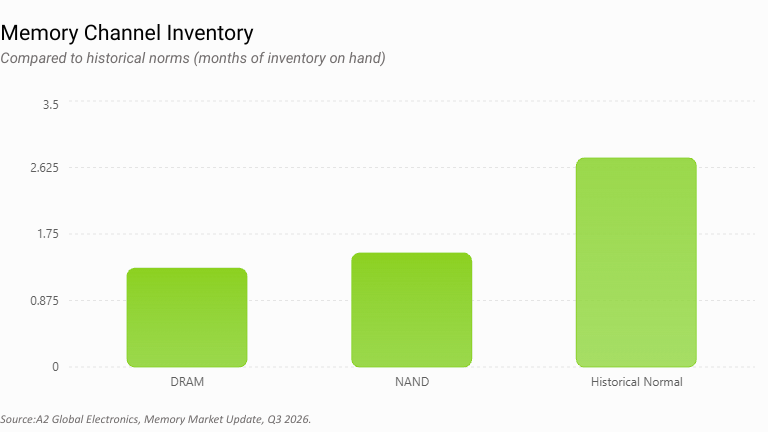
Memory continues to dominate headlines, but the impact extends much further. According to the latest Quarterly Memory Market Update, DRAM inventory has fallen to approximately 1.3 months, while NAND sits around 1.5 months, nearly half of historical inventory levels. At the same time, AI servers continue consuming high-bandwidth memory faster than manufacturers can expand capacity. Significant new fabrication capacity is not expected before mid-2027.
The result is a ripple effect across the entire electronics ecosystem.
OEMs are now seeing longer lead times and tighter allocations for:
- Power management ICs
- MOSFETs
- Connectors
- Optical components
- MLCCs
- Storage devices
PCB Materials Have Become the Next Bottleneck
Many OEMs still focus primarily on semiconductor availability, however, printed circuit board materials have become one of the fastest-growing supply risks.
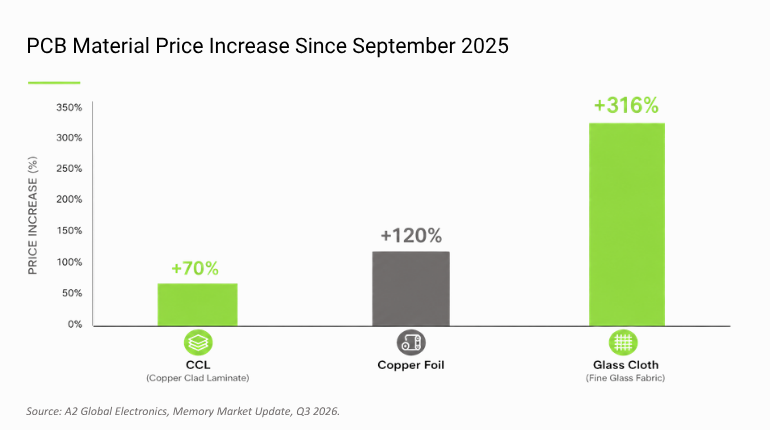
Copper foil, glass fabric, and epoxy resin are experiencing their tightest supply conditions since 2021. Standard FR-4 lead times have increased from 2 to 4 weeks to more than 8 weeks, while advanced ultra-low-loss laminates now range from 26 to 40 weeks.
Material costs tell the same story.
- CCL prices have increased approximately 70% since September 2025.
- Fine glass cloth pricing has increased more than 316%.
- Eight rounds of laminate price increases have occurred since December 2025.
Engineering Decisions Now Influence Supply Chain Performance
Many supply risks can be reduced before procurement begins. Design choices such as laminate selection, PCB stack-up optimization, approved alternates, and eliminating unnecessary specialty finishes can significantly improve material availability while reducing lead-time exposure.
This makes early engineering collaboration more valuable than ever. Manufacturability reviews are no longer focused solely on production efficiency. They have become an essential supply chain risk management tool.
Five Actions OEMs Can Take Today
Organizations that outperform during constrained markets tend to follow the same principles:
1.Engage manufacturing partners during product design
Identify supply risks before designs are finalized.
2. Qualify alternate components and PCB materials
Increase sourcing flexibility before shortages occur.
3. Share accurate forecasts
Longer forecast visibility improves supplier allocation opportunities.
4. Place orders earlier
With many constrained components extending beyond 16 to 52 weeks, early commitments create more sourcing options.
5. Monitor risk continuously
Markets continue evolving. Procurement strategies should evolve just as quickly.
How DSM Helps Customers Stay Ahead
Supply constraints are expected to continue well into 2027, particularly for AI-driven semiconductor technologies and advanced PCB materials. With that in mind, managing today’s supply chain requires much more than purchasing components. It calls for real-time market intelligence, strategic sourcing, engineering collaboration, and proactive risk management throughout the product lifecycle.
Dynamic Source Manufacturing continuously monitors market conditions, builds strategic safety stock for high-risk materials, pre-qualifies alternate components and laminate options, evaluates sourcing opportunities across global suppliers, and works with customers to improve forecast visibility before shortages affect production.
Our engineering, supply chain, and manufacturing teams work together from the earliest stages of product development to help customers reduce risk, improve manufacturability, and maintain production continuity even as market conditions evolve.
Reach out to DSM today: dsmsales@dynamicsourcemfg.com
Book a facility tour: Contact DSM